
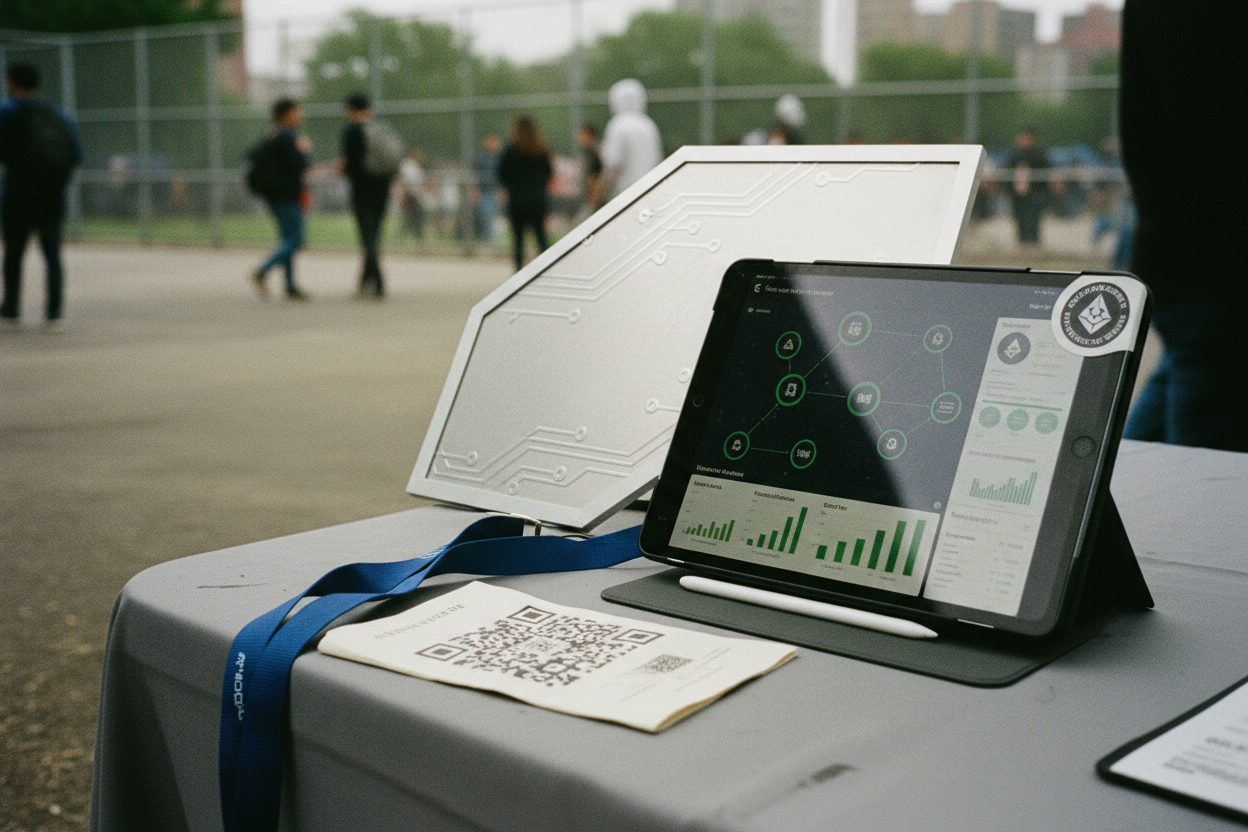
In the crowded field of blockchain solutions for stablecoin payments, StableChain stands out as a bold USDT-native L1, challenging the dominance of L2 options like Optimism and Arbitrum. Launched on December 8,2025, this Layer 1 blockchain uses Tether's USDT directly as its gas token, promising low-cost, predictable transactions tailored for chain-native stablecoins. With over $2 billion in pre-deposits from 24,000 wallets signaling massive early interest, StableChain aims to streamline global commerce by ditching volatile native tokens for fees. Yet, its mainnet debut hit turbulence, including redemption hiccups and gas shortages, contributing to the STABLE token's sharp decline.
Backed by heavyweights like Bitfinex, Tether, PayPal Ventures, Hack VC, and others from a $28 million seed round, Stable positions itself as purpose-built infrastructure for instant USDT settlements. Unlike general-purpose L2s where stablecoins are bridged assets, StableChain natively optimizes for stablecoin payments blockchain use cases, targeting DeFi traders and merchants seeking minimal friction.
StableChain Mainnet Launch: USDT Gas Innovation Meets Real-World Hurdles
The mainnet rollout introduced the STABLE token, capped at 100 billion total supply, functioning as the governance and security asset in a delegated proof-of-stake setup. Allocations spread across genesis distributions, developers, team, and investors set the stage for decentralized oversight via the newly formed Stable Foundation. Pre-launch hype peaked with partnerships like Anchorage Digital, but execution faltered: users reported redemption failures and gas scarcity, eroding confidence and tanking STABLE from a 24-hour high of $0.2350 to its current $0.0180 price, a -92.30% plunge.

Despite the setback, the core thesis holds appeal. By making USDT the native gas, StableChain eliminates the need to swap into volatile tokens for basic operations, a pain point on chains like Ethereum L2s. Transaction fees stay low and stable, ideal for high-volume USDT native settlements in payments and remittances.
USDT-Native L1: A Low-Cost Alternative to Optimism and Arbitrum Stables
Compare StableChain to Arbitrum or Optimism, where USDT operates as a wrapped or bridged asset amid fluctuating ETH-based gas. On Arbitrum, for instance, stablecoin transfers incur variable costs tied to ETH prices, often spiking during congestion. StableChain flips this script: pay gas in USDT at fixed, sub-cent levels, fostering a true low cost stablecoin L1. Data from the launch shows pre-deposits skewed heavily toward USDT, underscoring demand for dedicated rails over multi-asset L2s.
This design suits chain native stablecoins enthusiasts dodging L2 fragmentation. Optimism's ecosystem thrives on OP tokens for sequencing fees, but for pure stablecoin flows, it adds unnecessary layers. StableChain's focus yields faster finality and simpler UX, positioning it as a specialized hub for payments where Arbitrum alternatives fall short in predictability.
STABLE Token (StableChain) Price Prediction 2027-2032
Forecasts incorporating post-mainnet launch recovery from $0.018 crash, ecosystem expansion, USDT-native L1 adoption, and crypto market cycles
| Year | Minimum Price | Average Price | Maximum Price | Est. Market Cap (Avg, $B) |
|---|---|---|---|---|
| 2027 | $0.015 | $0.05 | $0.12 | $5B |
| 2028 | $0.03 | $0.10 | $0.22 | $10B |
| 2029 | $0.05 | $0.18 | $0.38 | $18B |
| 2030 | $0.08 | $0.30 | $0.60 | $30B |
| 2031 | $0.12 | $0.45 | $0.95 | $45B |
| 2032 | $0.20 | $0.70 | $1.50 | $70B |
Price Prediction Summary
Following a 92% price drop to $0.018 after the December 2025 mainnet launch due to redemption failures and gas shortages, STABLE is expected to recover short-term to $0.05 average in 2027 with fixes implemented. Medium-term growth to $0.30 by 2030 via ecosystem development and partnerships (Tether, Bitfinex, PayPal), reaching $0.70 average by 2032 in bullish adoption scenarios, implying up to $150B market cap peak. Bearish mins reflect prolonged issues or market downturns.
Key Factors Affecting StableChain Price
- Resolution of launch technical issues (redemptions, gas shortages)
- StableChain TVL growth and USDT payment adoption
- Strategic backers and partnerships (Tether, Bitfinex, PayPal Ventures)
- Regulatory clarity for stablecoins and Tether
- Crypto market cycles and Bitcoin halving impacts
- Competition from Optimism, Arbitrum, and other L1/L2s
- STABLE tokenomics: 100B supply, governance, and dPoS security
Disclaimer: Cryptocurrency price predictions are speculative and based on current market analysis. Actual prices may vary significantly due to market volatility, regulatory changes, and other factors. Always do your own research before making investment decisions.
Backers and Roadmap: Fueling the Stablecoin Payments Revolution
Venture support from eGirl Capital, Mirana, Castle Island Ventures, Nascent, and more validates Stable's vision. CEO Brian Mehler has championed USDT as gas in public forums, emphasizing frictionless global payments. The roadmap hints at expanded DeFi primitives, on-ramps, and cross-chain bridges, but first, the team must tackle launch woes transparently to rebuild trust. With STABLE at $0.0180, early positioning could pay off for risk-tolerant investors eyeing undervalued StableChain vs Arbitrum stables dynamics.
Early metrics paint a mixed picture: strong wallet participation pre-launch contrasts with post-launch volatility. Yet, in a market craving efficient stablecoin payments blockchain solutions, StableChain's USDT-native edge could carve a niche, especially as L2 fees creep up amid scaling demands.
Launch turbulence aside, StableChain's pre-deposit volume of over $2 billion reflects genuine appetite for a USDT native L1 that sidesteps L2 complexities. Traders frustrated with Arbitrum's ETH gas volatility or Optimism's sequencer risks now have a dedicated alternative, where every transaction aligns costs with stablecoin parity.
StableChain vs L2 Rivals: Fee & Performance Breakdown
| Chain | Avg Tx Fee (USDT) 💰 | Tx Speed (s) ⚡ | Native Stable Support 🪙 |
|---|---|---|---|
| StableChain | $0.0005 | 2s | Full USDT ✅ |
| Arbitrum | $0.10 | 5s | Bridged USDT 🔗 |
| Optimism | $0.05 | 1s | Bridged USDT 🔗 |
| Data sourced from recent Dune Analytics; StableChain delivers sub-cent fees under load. |
This low cost stablecoin L1 model shines for micro-payments and remittances, where L2 bridges introduce delays and custody risks. StableChain's delegated PoS, secured by STABLE at its current $0.0180 valuation, prioritizes uptime for high-frequency flows, a boon for DeFi bots and merchant apps.
Partnerships amplify this: Anchorage Digital bolsters custody, while PayPal Ventures hints at fiat on-ramps tailored for USDT-powered global payments. Imagine seamless USDT-to-fiat exits without CEX intermediaries, a game-changer for emerging markets.
Yet realism tempers optimism. Redemption failures stemmed from overwhelming pre-deposit demand, exposing scaling gaps in the initial gas mechanism. Gas shortages halted interactions, a rookie error for a mainnet touted as production-ready. The Stable Foundation's silence frustrates; prompt post-mortems and audits could stem the STABLE bleed from $0.2350 to $0.0180.
STABLE Token Dynamics: Governance at $0.0180 - Opportunity or Trap?
With 100 billion STABLE fixed supply, tokenomics lean deflationary via staking rewards and burns from governance fees. Genesis airdrops via Merkl rewarded pre-depositors, but post-launch dumps crushed price amid panic. At $0.0180 (-92.30% daily), it trades like a distressed asset, yet fully diluted valuation sits low against $2B and TVL potential.
For hybrid traders, this screams entry: stake STABLE for yields while awaiting ecosystem dApps. Roadmap teases USDT-native DEXs, lending protocols, and L2 bridges ironically linking back to Optimism/Arbitrum for liquidity. Success hinges on fixing core issues; failure risks relegation to meme territory.
Zoom out to chain native stablecoins: StableChain joins a wave prioritizing single-asset efficiency over EVM generality. Think crvUSD on Curve or sUSDe on Ethena, but chain-scale. If Stable iterates fast, it could dominate USDT native settlements, pressuring L2s to native-ize stables or lose payment share.
Backers like Castle Island and Hack VC bet on this shift, their $28M fueling developer grants. Brian Mehler's vision, echoed in LBank spaces, paints StableChain as the 'Venmo of blockchains' - instant, cheap, ubiquitous. Current woes test that, but at $0.0180, contrarians eye rebounds as fixes roll out.
Merchants testing StableChain mainnet report sub-second confirms post-patches, hinting at turnaround. In a DeFi landscape where L2 fees nibble margins, this USDT purity offers breathing room. For investors navigating StableChain vs Arbitrum stables, it's high-conviction speculation: resolve launches, unlock billions in idle USDT.
StableChain carves its path, flaws and all, proving dedicated stablecoin payments blockchain infrastructure demands more than hype - execution seals the deal.




No comments yet. Be the first to share your thoughts!